








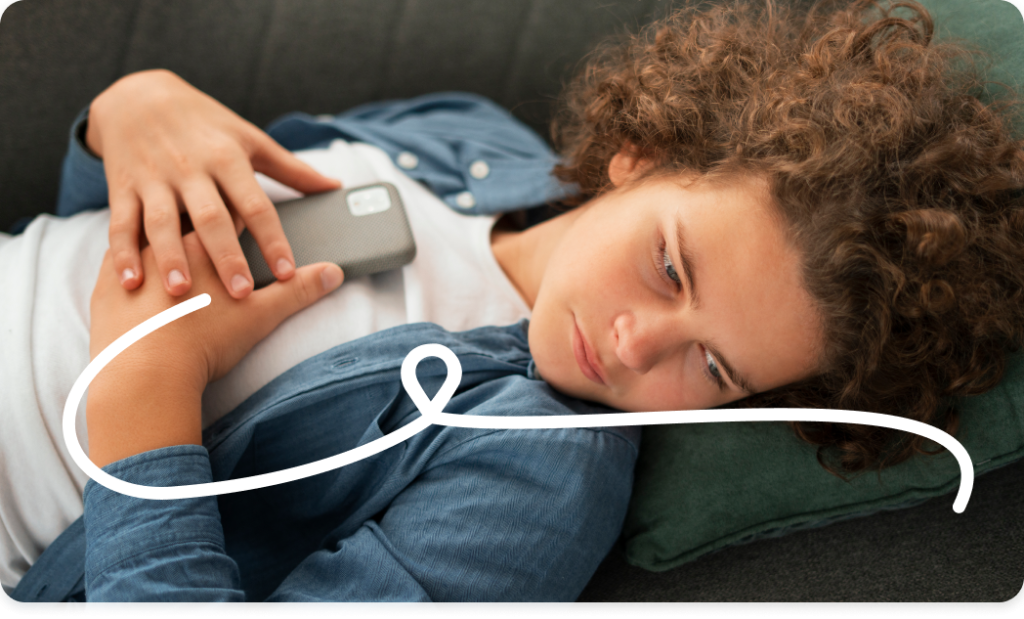
Digital mental health apps for kids and teens have exploded in popularity. Breathing apps, meditation apps, journaling tools, mood trackers, CBT-based tools, ADHD focus apps, and even AI emotional support chatbots — children now have hundreds of options at their fingertips.
Parents often wonder:
- “Are these apps actually helping my child?”
- “Why does my child try so many apps but still struggle?”
- “Could these apps replace therapy?”
Mental health apps can support emotional wellness — but only when they’re used correctly and for the right problem. When children use them to self-diagnose or as the only form of support, the apps often fail, leaving kids discouraged and no better than before.
This guide breaks down why digital mental health apps work for some kids but not others, and how families can use them safely as part of a structured, accurate, and comprehensive mental health plan.
The Rise of Digital Mental Health Apps for Kids
Children and teens are using digital tools more than ever. Many apps promise to:
- reduce anxiety
- improve mood
- help with focus
- teach coping skills
- support sleep
- build emotional awareness
They’re accessible, private, and easy to download — which makes them appealing. But there’s a major problem: Most apps treat symptoms. They don’t identify causes.
Kids rarely have just one simple issue. Their emotional struggles are layered, developmental, and affected by home life, school demands, and their internal biological wiring.
No single breathing app or journaling app can understand all of that.
Why Most Mental Health Apps Don’t Work for Kids
Here are the real reasons children get stuck in the “app loop” — downloading one tool after another without improvement.
1. Kids Self-Diagnose Incorrectly
A child may believe:
- “I can’t focus, so it must be ADHD.”
- “I’m stressed, so this is anxiety.”
- “I get upset easily, so I need an anger app.”
But focus problems can come from:
- ADHD
- anxiety
- autism
- sensory issues
- sleep problems
- trauma
- learning differences
- depression
If the child misunderstands the cause, they choose the wrong tool — and nothing changes.
Wrong diagnosis → wrong app → no improvement.
2. Apps Treat Only One Piece of the Puzzle
Most digital apps target one area:
- breathing
- grounding
- journaling
- scheduling
- focus timers
- mood tracking
But children’s struggles typically involve several interconnected factors:
- emotions
- attention
- stress
- social challenges
- sleep
- learning demands
- self-esteem
- developmental needs
An app can treat a slice, not the whole child.
3. Apps Cannot See Context — Which Is Everything in Child Psychiatry
Apps don’t know:
- where symptoms happen (home vs. school)
- what triggered a behavior
- whether the child misunderstood a situation
- whether the issue is developmental or concerning
- what teachers observe
- what family dynamics exist
Apps react to whatever the child types — not the full picture.
4. When Apps Don’t Help, Kids Blame Themselves
Children often think:
“Everyone else seems to improve with these apps… why am I still struggling?”
This leads to:
- discouragement
- hiding symptoms
- loss of motivation
- not telling parents
- believing “nothing works for me”
The truth?
It’s not the child that failed.
It’s the strategy that was incomplete.
5. Kids Bounce Between Apps With No Plan
Many parents see this pattern:
- Child downloads a mental health app
- Uses it for a few days
- Says, “It doesn’t work”
- Downloads another one
- Repeats
This isn’t laziness. It’s lack of direction.
Apps are tools — not treatment plans.
The Real Missing Piece: Accurate Diagnosis
All mental health apps assume:
- the user knows their problem
- the user understands their symptoms
- the symptoms fit the app’s model
- the app matches the root cause
But children cannot diagnose themselves, and apps cannot diagnose children.
Childhood symptoms overlap heavily. The same behavior can come from completely different root causes.
This is why diagnosis matters most. Correct diagnosis leads to correct tools — and real progress.
What Actually Helps Kids: A Complete, Guided Tailored Mental Health Plan
Kids make the most progress when care includes:
- a comprehensive assessment
- an accurate diagnosis
- counseling or therapy
- behavioral strategies
- medication when appropriate
- parent coaching
- school recommendations
- and then digital tools
Apps become powerful after you know what problem they’re supposed to support.
Apps should reinforce treatment — not replace it.
Where Mental Health Apps Do Help — When Used Correctly
When paired with professional guidance, mental health apps are valuable for:
- practicing coping skills
- improving emotional awareness
- maintaining routines
- tracking patterns
- reinforcing therapy concepts
- reducing stress between visits
- encouraging insight
Apps shine when they are part of a guided plan — not a guessing game.
How MindWeal Uses Digital Tools the Right Way
MindWeal integrates technology into care, but never relies on it alone.
Our model always starts with:
1. A comprehensive evaluation
Using M-Wise™, our 1,300-touchpoint interactive assessment, families provide a deep and structured understanding of a child’s emotional, developmental, and behavioral patterns.
2. A full assessment with a board-certified provider
A clinician reviews the M-Wise data, clarifies symptoms, explores context, and finalizes the diagnosis.
3. A personalized treatment plan
This may include counseling, behavioral strategies, parent guidance, school supports, and medication when appropriate.
4. Digital tools added intentionally
Apps are selected based on the child’s diagnosis and treatment plan — not a random download or guess.
This ensures digital tools support real progress rather than create confusion.
Final Thoughts
Mental health apps can be helpful — but not when children rely on them for self-diagnosis or as standalone solutions. They are supportive tools, not treatment.
With the right diagnosis, the right plan, and the right digital tools, kids can make meaningful, lasting progress.
Educational Disclaimer:
This article is for general educational purposes only and does not replace a professional mental health evaluation. If you have concerns about your child’s emotional health, consider a comprehensive assessment with a qualified pediatric mental health specialist.
Related post

The Modern ADHD Puzzle: Are We Overdiagnosing, or Has Childhood Really Changed?

AI, Mental Health, and Your Child: What Parents Should Really Know in 2025.